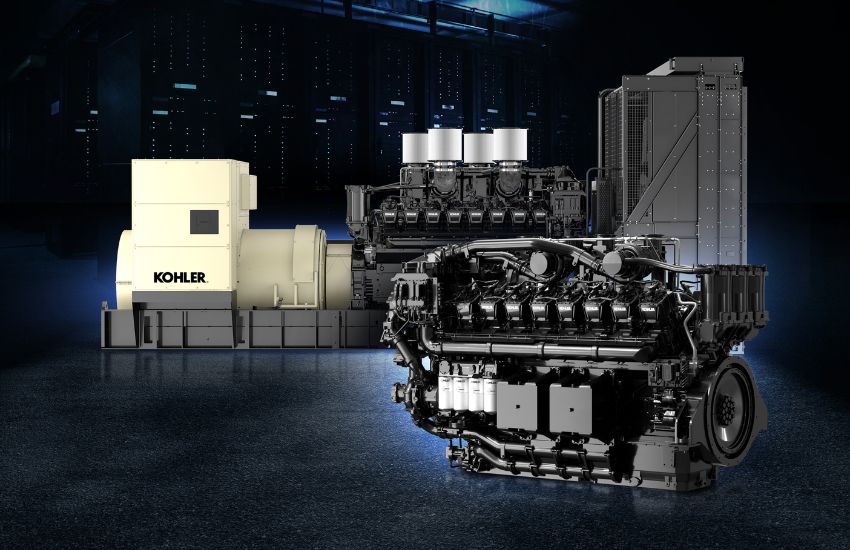
As AI infrastructure scales, thousands of GPUs operating in synchronized cycles can create rapid, repetitive fluctuations in electrical demand. For data center operators, developers and infrastructure providers, that raises new questions around whether critical power systems designed for more predictable operating conditions are ready for the highly dynamic environments AI is creating.
A new eBook from Rehlko, AI Readiness Starts with Power: Designing for Real-World Load Conditions, explores what this shift means for the design, testing and validation of critical power infrastructure.
Rather than focusing solely on installed capacity or backup availability, the eBook examines a growing priority for AI data centers: system performance under load.
It explores how traditional assumptions around transient events and steady-state operation are being challenged by AI workloads, where rapid changes in demand can leave power systems operating in a near-continuous state of recovery. It also looks at how these conditions affect both grid-connected data centers and emerging islanded facilities where on-site generation serves as the primary source of power.
Readers will also learn how approaches including dynamic modeling, digital twins, hardware-in-the-loop testing and system-level validation can help infrastructure teams better understand power system behavior before and after deployment. The eBook considers how these tools can inform decisions around generator sizing, battery energy storage, controls and overall system architecture while reducing reliance on conservative assumptions.
As the data center industry races to bring new AI capacity online, power availability remains a critical challenge. But securing enough megawatts is only part of the equation. Those systems must also be capable of delivering stable, predictable performance under the real-world operating conditions AI creates.
Read the full Rehlko eBook, AI Readiness Starts with Power: Designing for Real-World Load Conditions.