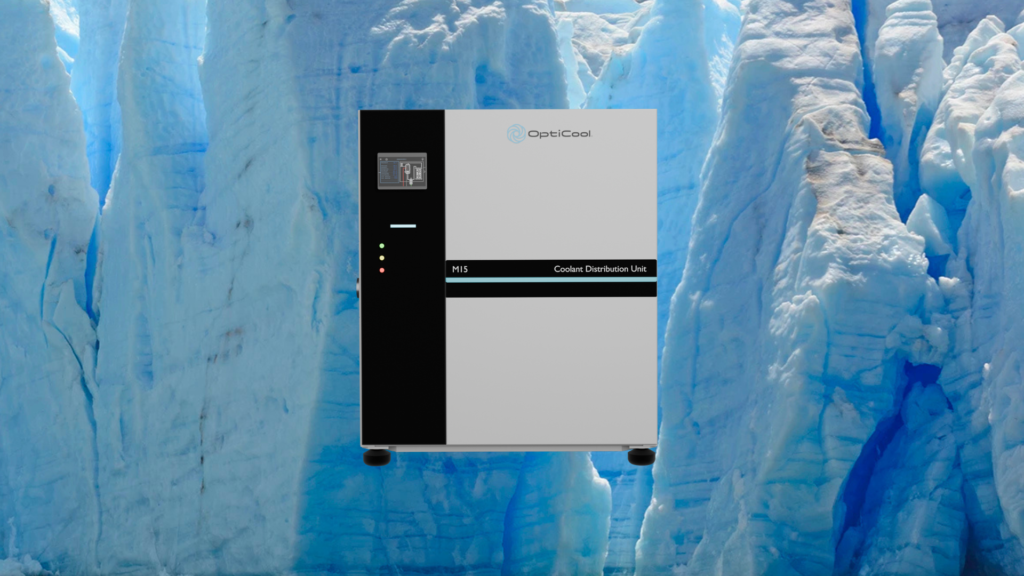
As artificial intelligence (AI) and high-performance computing (HPC) workloads grow, so does the amount of heat generated inside the data center. Traditional air-based cooling methods struggle to manage these loads effectively, particularly as rack densities climb past 80kW. To address this challenge, OptiCool Technologies has introduced a 120kW Rear Door Heat Exchanger (RDHx), the highest-capacity RDHx currently available.
Why Higher-Capacity Cooling Matters
AI training and HPC clusters concentrate compute power at a scale that was uncommon only a few years ago. A single rack may now draw as much power as an entire row once did, and with that comes significant thermal output. Operators need cooling systems that:
- Remove large amounts of heat directly at the rack
- Avoid major facility overhauls or specialized buildouts
- Support both current and future density requirements
How the 120kW RDHx Works
OptiCool’s design is based on two-phase refrigerant cooling. Instead of raising the temperature of the coolant, server heat drives a phase change from liquid to gas. This process enables high levels of heat removal without requiring large volumes of chilled water.
The system returns air to the room at a neutral temperature, preventing hot spots and reducing strain on the broader cooling infrastructure. Each rack can operate with a different heat load profile, allowing for flexible deployment across diverse environments.
“The 120kW Rear Door Heat Exchanger sets a new standard for cooling today’s high-density AI and HPC workloads,” said Matthew Roberts, VP of Sales at OptiCool Technologies. “No other rear door cooler comes close to this capacity. Our first-to-market, two-phase refrigerant design gives operators a direct path to cooling 80kW+ racks without the cost, risk, or vendor lock-in of other liquid cooling technologies.”
Efficiency and Reliability Advantages
The RDHx approach provides several benefits compared to conventional cooling:
- Energy use reduction: Up to 90% less energy consumption than air-based CRAC/CRAH systems
- Sustainability gains: Deployments have achieved PUE values as low as 1.02, improving ESG metrics
- Operational reliability: With over 7,000 RDHx units in service, the design has a proven track record and minimal moving parts
- Scalability: The new 120kW model expands OptiCool’s lineup (30kW, 60kW, 120kW), giving operators a modular path as compute requirements increase.
Preparing for AI-Ready Data Centers
The introduction of a 120kW rear door unit reflects the scale of change underway in digital infrastructure. As GPU-based systems become central to AI development and HPC research, cooling efficiency will be critical to maintaining performance, controlling costs, and meeting sustainability goals.
Learn more about OptiCool’s refrigerant-based cooling solutions and how they support next-generation data centers at: www.opticooltechnolgies.com